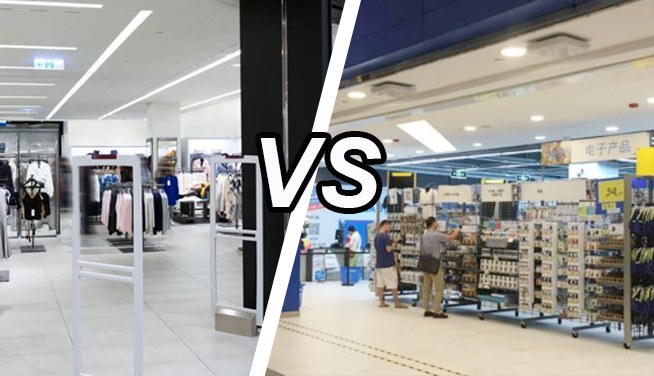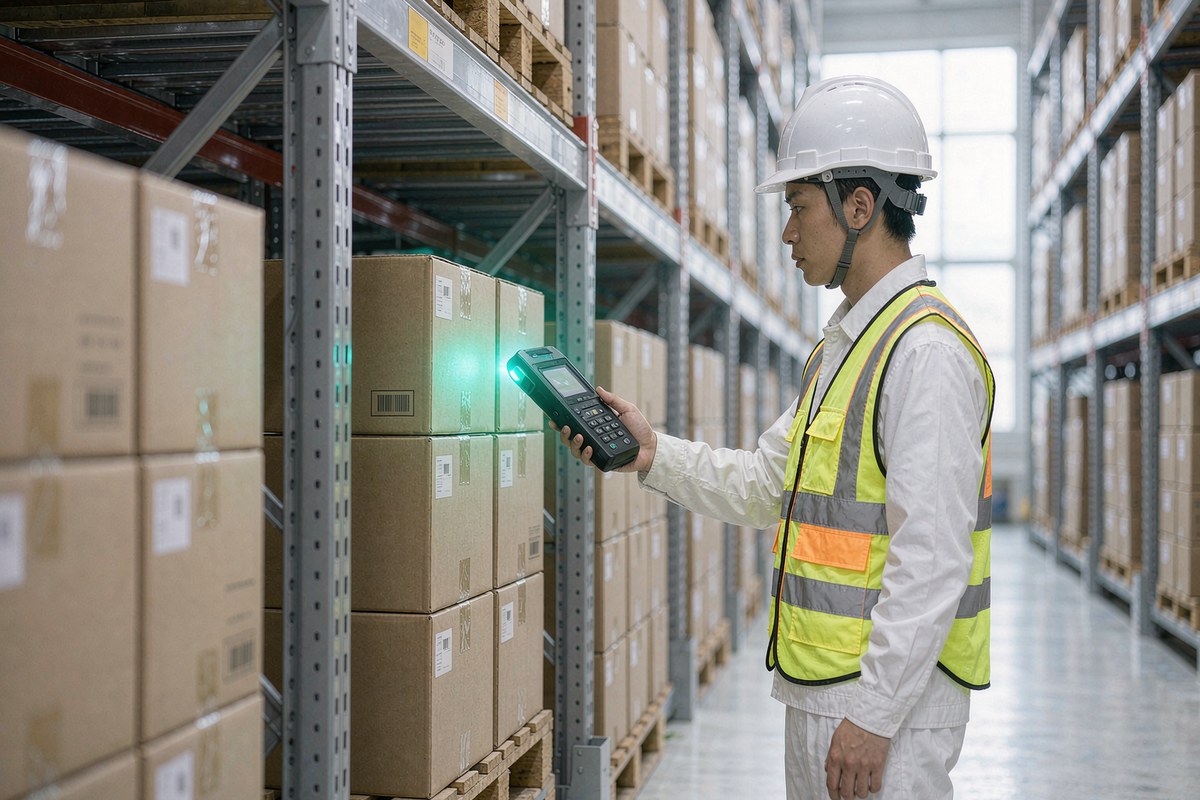
Almost every company planning an RFID project asks the same question: "Our barcode system works fine — why should we upgrade to RFID?"
It's a critical question at the selection stage. In this guide, we compare RFID and barcode technology across four dimensions: underlying principles, real-world scenario performance, cost, and return on investment (ROI).
Key takeaway: Barcodes won't disappear entirely, but for bulk reading, non-line-of-sight capture, and end-to-end data closure, RFID delivers an overwhelming performance advantage — making it the clear direction for warehouse and asset management digitalization.
1. How They Work: One Letter Apart, Worlds of Difference
Barcodes and RFID may sound similar, but their operating principles are fundamentally different.
|
|
Barcode
|
RFID
|
|
Principle
|
Optical scanning — the scanner must physically "see" the code
|
Electromagnetic backscatter — contactless "sensing"
|
|
Reading
|
Precise alignment, zero obstruction, one item at a time
|
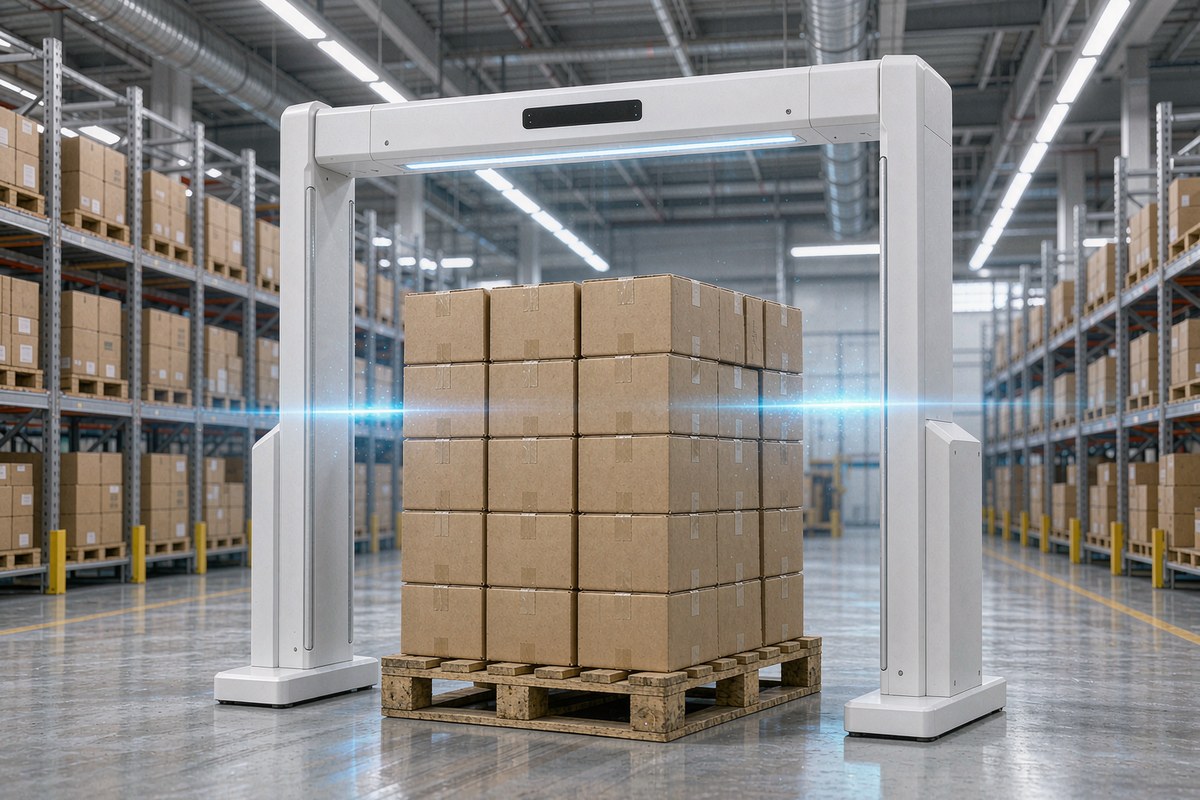
Reads through cartons, plastics and fabrics; hundreds of items in one pass
|
|
Data
|
Fixed at printing, cannot be rewritten
|
Chip data rewritten repeatedly; passive tags last 5–10 years
|
|
Operation
|
Manual aiming for every item
|
Automatic identification at portals — virtually no manual handling
|
In one sentence: barcodes are "eyes" — they must see. RFID is "sensing" — it only needs to be near.
2. Six Core Scenarios Compared
|
Scenario
|
Barcode
|
RFID
|
|
1. Inventory counting
|
500 m² apparel store: 3–4 hours per count, accuracy depends on staff, about 1 count/month
|
Full store in 15–20 minutes, accuracy above 99.5%, daily counting practical
|
|
2. Inbound & outbound
|
50 cartons per pallet: 3–5 minutes, scanning box by box
|
Whole pallet through a portal: all 50 cartons in 2 seconds, auto-linked to the order
|
|
3. Loss prevention
|
None — peel off the label and it's gone
|
Hidden tags trigger exit alarms: which item, when, which exit
|
|
4. Finding items
|
Staff search from memory
|
"Find mode" shows distance and direction — located in seconds
|
|
5. Harsh environments
|
Fails when smudged, damp or folded
|
Embedded tags; oil and dust don't matter (special tags for metal/liquids)
|
|
6. Data closure
|
One action: identification
|
EPC codes close the loop: production → warehousing → sale → returns
|
3. Cost Comparison: Don't Look Only at Unit Price
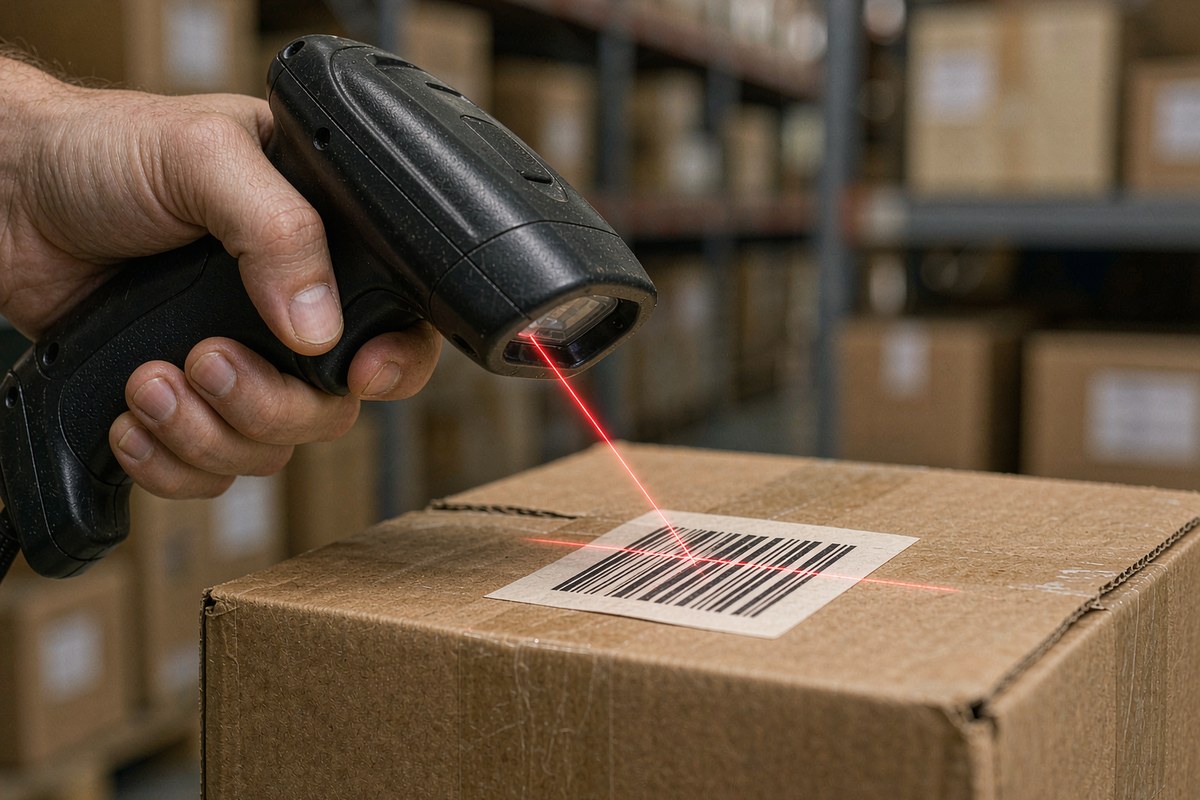
Barcodes: Labels cost just ¥0.01–0.05 (~USD 0.002–0.01) each and scanners only a few hundred yuan, so the initial investment is minimal. But labor costs are high, scanning must be item by item, counting is slow, and there's no built-in loss prevention or hidden upside.
RFID: Flexible tags cost ¥0.3–0.8 (~USD 0.04–0.11) each and readers range from thousands to tens of thousands of yuan — a significantly higher initial investment. But labor costs drop thanks to bulk automatic identification, counting efficiency improves 10x or more, anti-theft is built in (potentially replacing a standalone EAS system), and hidden gains come from better inventory accuracy and lower shrinkage.
Example — a mid-sized apparel store: An RFID solution requires about ¥40,000–60,000 (~USD 5,600–8,400) upfront and generates ¥60,000–130,000 (~USD 8,400–18,000) in annual benefits from labor savings, reduced shrinkage and fewer stockouts. That means a payback period of roughly 5–6 months. Barcodes may be cheap to start, but recurring labor costs are often several times higher each year. (Actual payback depends on store size, SKU count and process changes.)
4. When Barcodes Are Still the Better Choice
To be objective, there are three situations where you shouldn't rush into RFID:
-
Very few SKUs and low turnover: A small warehouse with a few dozen SKUs is fine with human memory plus simple scanning.
-
Extremely limited budget: Get your processes running first; RFID can wait until volume grows.
-
Very low item value: Putting a ¥0.5 tag on a ¥2 product simply isn't economical.
The most common hybrid model: RFID on outer cartons for case-level tracking, plus barcodes on individual items inside to balance cost. The two technologies each do what they do best — it doesn't have to be either/or.
5. FAQ: Frequently Asked Questions About RFID vs. Barcodes
Q1: Do we have to scrap all our barcode equipment and processes after adopting RFID?
No. Most RFID handhelds also support barcode scanning, and existing barcode labels can coexist with new RFID tags during the transition. POS checkout supports a dual mode: RFID bulk reading with barcode fallback.
Q2: Does RFID work around metal and liquids?
Yes — but you must choose anti-metal tags and liquid-resistant designs. Using ordinary tags in metal environments is the real pitfall. See our RFID Tag Selection Guide for details.
Q3: Can RFID tags be peeled off as easily as barcodes?
Flexible tags can be made as wash-care labels sewn inside garments, or anti-metal tags mounted in hidden spots on assets. They're far harder to remove than barcodes, and tamper-evident designs can trigger alarms.
Q4: Is RFID worth it for a small store?
Apparel and retail stores with monthly revenue above roughly ¥200,000 (~USD 28,000) are usually a good fit, with payback in about 6–8 months. For smaller stores, start with a lightweight "system + counting" combo for under ¥20,000 (~USD 2,800).
Q5: Are there regulatory standards for RFID?
Yes. UHF RFID is regulated by region — China uses the 920–925 MHz band with the ISO 18000-6C / EPC Gen2 protocol (national standard GB/T 29768); the EU uses 865–868 MHz and the US uses 902–928 MHz. Always choose compliant equipment for your market.
6. Conclusion: So, What Is the Future of Warehouse Management?
Laying the comparisons side by side: on unit cost, barcodes win — RFID tags are 10–20 times more expensive. On bulk efficiency, RFID wins by a factor of 10 or more. Loss prevention: barcodes have none, RFID has it built in. Data closure: RFID's EPC codes cover the entire chain; barcodes can't. For ultra-low-value items, barcodes remain necessary because RFID tag costs aren't economical. And on overall retail and warehouse ROI, RFID pays back in about 6 months.
Across six dimensions, barcodes hold only two positions — "cheap" and "ultra-low-value items." The future of warehouse management clearly points to RFID.
RFID is not a "replacement" for barcodes — it's an "upgrade." Bulk identification, loss prevention, and data closure are RFID's home ground; for low-value items, tiny SKU counts, and tight budgets, barcodes remain efficient and practical.
Ready to evaluate RFID for your warehouse?
BOWEI provides a full range of UHF RFID hardware and solution design services, and can help you evaluate upgrade paths and calculate ROI based on your existing barcode system. Contact us for a free consultation →